Monday, February 22, 2010
Discussion on Drum Radio talk show
Drum Radio invited me to participate in an hour-long question and answer session concerning African issues on Feb. 20, 2010. Many of the questions came from Ugandans opposed to the Museveni government and who are now members of the diaspora in Europe. Other questions dealt with concerns over the elimination of term limits in a growing number of African countries.
I expressed deep concern with the tendency in Africa today to ignore or reverse term limit provisions in many African constitutions. Niger was one of the most recent to overturn term limits but followed similar earlier actions by Burkina Faso, Chad, Gabon, Guinea, Togo, Tunisia, Algeria, Cameroon and Uganda. On the other hand, a number of African leaders have complied in recent years with the term limit provisions in their constitution. At the top of the list is South Africa followed by Tanzania, Benin, Cape Verde, Sao Tome, Mozambique, Ghana, Mali and Kenya.
One person suggested that the United States has a history of supporting dictators, leaders who ignore term limits and those who conduct coups in Africa. Why did it not take steps to end such practices? I emphasized that I do not speak for the U.S. government. It is true that the U.S. has good relations with the leaders of countries like Uganda and Ethiopia, whose democratic credentials have been tarnished. It did make clear to the Ugandan government that it opposed revocation of term limits and that it disapproves of some human rights practices in Ethiopia. But the United States also relies on countries like Uganda and Ethiopia for cooperation in African peacekeeping and supporting U.S. policies in the region as in the case of Somalia. Sometimes, the U.S. approach to balancing principles and dealing with day-to-day problems is schizophrenic. At the same time, the United States has taken action against governments like Madagascar that have sharply retreated from democratic principles. The United States suspended its large Millennium Challenge Account grant there.
When asked why Uganda allowed the United States to pressure it to send troops to Somalia in support of the Transitional Federal Government (TFG), I acknowledged that the United States strongly encouraged both Uganda and Burundi to send troops to Somalia in order to prevent the total collapse of the country and a take over by the extremist al-Shabaab organization. Without this African Union force, the TFG would fall. I emphasized that it was not just the United States that encouraged the creation of this force; it was an initiative of the African Union. The person raising this issue was not satisfied with my answers but had no ideas for preventing an extremist regime in Somalia, which would eventually disrupt the entire region.
One question dealt with the merits of power sharing in countries like Kenya and Zimbabwe. My interlocutor was not convinced power sharing had accomplished much. While I agreed that the situation in Kenya and Zimbabwe left much to be desired, I suggested that in principle power sharing is a good approach and needs more time to work. The key to successful power sharing is the willingness by both political sides or all sides in a multi-party system to accept compromise. Unfortunately, this is a commodity in short supply in much of Africa.
Another interlocutor asked why the United States had not joined the International Criminal Court (ICC). I responded it was my understanding that the United States did not want American forces serving overseas in places like Iraq and Afghanistan to be in a position of being called to account before the ICC. There are perhaps additional reasons.
There was a question concerning U.S. opposition to female genital mutilation (FGM) and U.S. unhappiness with a Ugandan draft bill in parliament to harshly punish homosexuals. The person asking the questions argued that both the existence of FGM and strong opposition to homosexuality are part of African culture. I responded that the United States strongly opposes FGM for health reasons as do virtually all African governments. Opposition to legislation that singles out homosexuals for punishment simply reflects current American attitudes on this subject.
Responding to a question, I doubted that that Libyan President Qaddafi’s long-standing desire to create a United States of Africa had much support among African leaders. I disputed, however, the questioner’s assertion that the United States is standing in the way of a United States of Africa. This is a decision for the Africans and it may happen some day, but I did not believe it would take place any time soon.

Friday, February 19, 2010
"Is There Such Thing As A Good Coup?"
I'm quoted in Jason McLure's Newsweek article, "Is There Such Thing As A Good Coup?." Here's the reference:
"I don't believe there is a 'good' extralegal coup," says David Shinn, a former U.S. ambassador to neighboring Burkina Faso. "What Tandja did by rejecting the decisions of Niger's established judicial and legislative institutions and extending himself in office was reprehensible. But the actions of the coup makers were equally wrong."Here's the full quote I provided to the reporter:
I don't believe there is a "good" extralegal coup. It is just that some are less bad than others. What Tandja did by rejecting the decisions of Niger's established judicial and legislative institutions and extending himself in office was reprehensible. But the actions of the coup makers were equally wrong. The only way that Niger can redeem itself at this point is to return quickly to civilian rule followed by a new free and fair election. I hope the United States and the African Union speak out against both the way in which Tandja remained in power and the manner that he was removed.
Assistant secretary of state for African affairs speaks at GW
 Image: Ambs. Shinn and Carson. Photo by Jessica McConnell/GW.
Ambassador Johnnie Carson, assistant secretary of state for African affairs, addressed some 200 students and members of the public at the Elliott School of International Affairs on February 18, 2010. The Elliott School is just a short sprint from the State Department.
Ambassador Carson had a 37-year career in the Foreign Service that included ambassadorships to Kenya, Zimbabwe and Uganda and as principal deputy assistant secretary of state for African Affairs.
Following an introduction by the dean of the Elliott School, Michael Brown, Ambassador Carson focused his remarks on U.S. policy towards Africa in the Obama Administration.
He identified five priorities in U.S. policy towards Africa.
Image: Ambs. Shinn and Carson. Photo by Jessica McConnell/GW.
Ambassador Johnnie Carson, assistant secretary of state for African affairs, addressed some 200 students and members of the public at the Elliott School of International Affairs on February 18, 2010. The Elliott School is just a short sprint from the State Department.
Ambassador Carson had a 37-year career in the Foreign Service that included ambassadorships to Kenya, Zimbabwe and Uganda and as principal deputy assistant secretary of state for African Affairs.
Following an introduction by the dean of the Elliott School, Michael Brown, Ambassador Carson focused his remarks on U.S. policy towards Africa in the Obama Administration.
He identified five priorities in U.S. policy towards Africa.
- To help build strong and stable democracies on the continent. Sustainable economic development and the prevention of armed conflict must be coupled with the development of accountable government institutions.
- To support economic growth and development. This must include the full inclusion of women in all areas of the economy. The centerpiece of this policy is the Millennium Challenge Account and the Africa Growth and Opportunity Act. In addition, the Obama Administration has pledged $3.5 billion for a food security program that will provide critical tools to African farmers to build local capacity.
- To strengthen public health systems so that they can deal with the ravages of HIV/AIDS, malaria, cholera, tuberculosis and hepatitis. The Obama Administration has pledged to continue the President’s Emergency Plan for AIDS Relief (PEPFAR).
- To help prevent, mitigate and resolve armed conflicts. There are new special envoys for Sudan and the Great Lakes Region to focus attention on these two especially troubled areas. The United States will work closely with the African Union in this effort.
- To work with America’s African partners to address transnational challenges such as narcotics trafficking, trafficking in persons, climate change and violent extremism. Extremist groups include local movements aligned with al-Qaeda.
 Image: Ambs. Shinn and Carson and Michael E. Brown, dean of the Elliott School. Photo by Jessica McConnell/GW.
Several of the questions dealt with the coup in Niger that removed President Mamadou Tandja from office fewer than 24 hours before Ambassador Carson gave his remarks. While Ambassador Carson condemned the extra-legal overthrow of the government in Niger, he also strongly criticized the manner in which Tandja extended his time in office. Tandja not only ignored the term limit provision in Niger’s constitution but then refused to abide by decisions of both the legislature and judiciary that upheld those term limits. The best solution now, Ambassador Carson said, is for a speedy return to civilian rule and an early free and fair election.
One participant asked why the United States had taken a prominent role in urging the United Nations Security Council to impose sanctions against Eritrea and why it had not done more to ensure implementation of the Algiers Agreement that defined the border between Ethiopia and Eritrea. Ambassador Carson responded that Washington’s door remains open to Eritrea. The United States would like to have better relations with Eritrea, and it also stands by implementation of the Algiers Agreement. He said he personally had reached out to Asmara on several occasions but was rebuffed each time. He emphasized that Eritrea’s actions in the region, especially Eritrea’s support for spoiler groups in Somalia, were hostile to several of its neighbors and in conflict with U.S. policy.
In response to a question about the crisis of governance in Nigeria, Ambassador Carson was generally optimistic. President Umaru Yar’Adua has been ill for months and is being treated at a hospital in Saudi Arabia. His prolonged absence from Nigeria raised questions about his ability to govern the country. When the president becomes incapacitated, the Nigerian constitution calls for the vice president to become acting president. Although Nigeria’s institutions delayed in taking this action, they ultimately did so. As a result, former Vice President Goodluck Jonathan is now acting president of Nigeria. Ambassador Carson explained that the constitutional process worked in Nigeria as it should.
A number of persons who asked questions expressed concern about setbacks in the democratic process in Africa. Ambassador Carson acknowledged that there had been some backsliding as underscored most recently in Niger and has also occurred recently in Guinea-Bissau, Guinea-Conakry, Madagascar and Mauritania. He was quick to point out, however, that there are also many governance success stories. He cited the cases of South Africa, Botswana, Namibia, Malawi, Mali, Benin, Ghana, Tanzania and Mauritius, among others.
One questioner asked what has happened to the Africa Command (AFRICOM). The United States announced it with such fanfare and suggested it would be a very different kind of military command with significant policy engagement. In the meantime, it seems to have disappeared from view.
Ambassador Carson responded that until the creation of AFRICOM, Africa was the only large region of the world that did not have a separate military command. The European Command in Stuttgart had responsibility for Europe and most of Africa. The Central Command in Tampa, Florida, watched over much of the Middle East and Northeast Africa and the Pacific Command in Hawaii had responsibility for the Pacific region and several Indian Ocean Islands that are part of Africa. AFRICOM placed all of Africa except Egypt, which remains with the Central Command, under its jurisdiction. U.S. foreign policy is, however, the purview of the State Department. The military commands support U.S. policy and bring some additional resources to those parts of the world where they have responsibility. In the case of Sub-Saharan Africa, the African Bureau of the State Department has primary policy responsibility.
Image: Ambs. Shinn and Carson and Michael E. Brown, dean of the Elliott School. Photo by Jessica McConnell/GW.
Several of the questions dealt with the coup in Niger that removed President Mamadou Tandja from office fewer than 24 hours before Ambassador Carson gave his remarks. While Ambassador Carson condemned the extra-legal overthrow of the government in Niger, he also strongly criticized the manner in which Tandja extended his time in office. Tandja not only ignored the term limit provision in Niger’s constitution but then refused to abide by decisions of both the legislature and judiciary that upheld those term limits. The best solution now, Ambassador Carson said, is for a speedy return to civilian rule and an early free and fair election.
One participant asked why the United States had taken a prominent role in urging the United Nations Security Council to impose sanctions against Eritrea and why it had not done more to ensure implementation of the Algiers Agreement that defined the border between Ethiopia and Eritrea. Ambassador Carson responded that Washington’s door remains open to Eritrea. The United States would like to have better relations with Eritrea, and it also stands by implementation of the Algiers Agreement. He said he personally had reached out to Asmara on several occasions but was rebuffed each time. He emphasized that Eritrea’s actions in the region, especially Eritrea’s support for spoiler groups in Somalia, were hostile to several of its neighbors and in conflict with U.S. policy.
In response to a question about the crisis of governance in Nigeria, Ambassador Carson was generally optimistic. President Umaru Yar’Adua has been ill for months and is being treated at a hospital in Saudi Arabia. His prolonged absence from Nigeria raised questions about his ability to govern the country. When the president becomes incapacitated, the Nigerian constitution calls for the vice president to become acting president. Although Nigeria’s institutions delayed in taking this action, they ultimately did so. As a result, former Vice President Goodluck Jonathan is now acting president of Nigeria. Ambassador Carson explained that the constitutional process worked in Nigeria as it should.
A number of persons who asked questions expressed concern about setbacks in the democratic process in Africa. Ambassador Carson acknowledged that there had been some backsliding as underscored most recently in Niger and has also occurred recently in Guinea-Bissau, Guinea-Conakry, Madagascar and Mauritania. He was quick to point out, however, that there are also many governance success stories. He cited the cases of South Africa, Botswana, Namibia, Malawi, Mali, Benin, Ghana, Tanzania and Mauritius, among others.
One questioner asked what has happened to the Africa Command (AFRICOM). The United States announced it with such fanfare and suggested it would be a very different kind of military command with significant policy engagement. In the meantime, it seems to have disappeared from view.
Ambassador Carson responded that until the creation of AFRICOM, Africa was the only large region of the world that did not have a separate military command. The European Command in Stuttgart had responsibility for Europe and most of Africa. The Central Command in Tampa, Florida, watched over much of the Middle East and Northeast Africa and the Pacific Command in Hawaii had responsibility for the Pacific region and several Indian Ocean Islands that are part of Africa. AFRICOM placed all of Africa except Egypt, which remains with the Central Command, under its jurisdiction. U.S. foreign policy is, however, the purview of the State Department. The military commands support U.S. policy and bring some additional resources to those parts of the world where they have responsibility. In the case of Sub-Saharan Africa, the African Bureau of the State Department has primary policy responsibility.
Flow of arms to/from Eastern and Southern Africa
The Stockholm International Peace Research Institute (SIPRI) released a brief report dated December 2009 on the transfer of arms to/from eastern and southern Africa during the years 2004-2008 (PDF). Prepared by Pieter D. Wezeman, it provides a good overview of the suppliers and the degree of transparency in these transfers.
 Most weapons procured by governments or non-state groups in eastern and southern Africa originate outside the region. South Africa is the only country in the region that exports substantial volumes of arms. South Africa was also the largest importer of major conventional arms in eastern and southern Africa from 2004-2008. Sudan was the second largest importer and Eritrea the third largest during the same time period.
Relatively small flows of arms have played a major role in armed violence in the region for many years.
No single country was the dominant arms supplier. During 2004-2008, the largest suppliers of major conventional arms to the region in order of importance were Germany, Russia, the United Kingdom, China and Sweden. All of the exports from Germany, the UK and Sweden went to South Africa. Russia was a major supplier to Eritrea, Sudan and Ethiopia. Most of the Chinese arms went to Namibia, Sudan and Zimbabwe.
Image: Creative commons licensed content by Flickr user Blyzz.
Most weapons procured by governments or non-state groups in eastern and southern Africa originate outside the region. South Africa is the only country in the region that exports substantial volumes of arms. South Africa was also the largest importer of major conventional arms in eastern and southern Africa from 2004-2008. Sudan was the second largest importer and Eritrea the third largest during the same time period.
Relatively small flows of arms have played a major role in armed violence in the region for many years.
No single country was the dominant arms supplier. During 2004-2008, the largest suppliers of major conventional arms to the region in order of importance were Germany, Russia, the United Kingdom, China and Sweden. All of the exports from Germany, the UK and Sweden went to South Africa. Russia was a major supplier to Eritrea, Sudan and Ethiopia. Most of the Chinese arms went to Namibia, Sudan and Zimbabwe.
Image: Creative commons licensed content by Flickr user Blyzz.
Most weapons procured by governments or non-state groups in eastern and southern Africa originate outside the region. South Africa is the only country in the region that exports substantial volumes of arms. South Africa was also the largest importer of major conventional arms in eastern and southern Africa from 2004-2008. Sudan was the second largest importer and Eritrea the third largest during the same time period.
Relatively small flows of arms have played a major role in armed violence in the region for many years.
No single country was the dominant arms supplier. During 2004-2008, the largest suppliers of major conventional arms to the region in order of importance were Germany, Russia, the United Kingdom, China and Sweden. All of the exports from Germany, the UK and Sweden went to South Africa. Russia was a major supplier to Eritrea, Sudan and Ethiopia. Most of the Chinese arms went to Namibia, Sudan and Zimbabwe.
Image: Creative commons licensed content by Flickr user Blyzz.
Tuesday, February 16, 2010
Gold mine of information on Southern Sudan
In 2009, the Southern Sudan Centre for Census Statistics and Evaluation published a "Statistical Yearbook for Southern Sudan."
This lengthy document, which you can access below, contains a treasure trove of data on population, health, nutrition, education, gender, forestry, tourism, displacement of people, demining, water, sanitation, environment, money, banking and finance. It also has some excellent maps. Anyone interested in the Southern Sudan will want to look at this document.
Statistical Yearbook for Southern Sudan 2009
Sunday, February 14, 2010
"African leaders who deliberately change their country’s constitutions in order to prolong their stay in power"
I am quoted in Henry Gombya's article "U.S. Diplomat Decries Hijack Of Constitutions in Africa" in The Black Star News. Here's one quote:
[Prof. Shinn] listed Uganda’s President Yoweri K. Museveni as among at least 12 African leaders who have changed their country’s constitutions with the sole purpose of extending their rule, and some of whom the U.S. government has continued to have good relations with. He added: “If you look at the list of those leaders who have extended in office, the United States has good relations with several of them [although] the relations with some of them have not been particularly good.” He said those African leaders who continued to enjoy good relations with the U.S. included the late Gabonese President Omar Bongo, and the Presidents of Algeria and Tunisia, even after their prolonged their regimes.
Friday, February 12, 2010
Article in Brown Journal of World Affairs
I have an article in the most recent issue of The Brown Journal of World Affairs (fall/winter 2009) titled "China and the Conflict in Darfur" (so far, the electronic version is only limited access).
It looks at China’s policy in Sudan generally and with specific reference to the crisis in Darfur since 2003. It concludes that China, after initially failing to appreciate the potential negative implications of its support for Sudan, eventually balanced successfully its interests in the country against the criticism that it received from the West.
China minimized the damage to its overall image by closely aligning its position on key Darfur decisions with those of the African Union and a vast majority of African and Arab countries. China preserved its political and economic interests in Sudan and eventually won grudging acceptance from the United States government for its more recent policy in Darfur. One outstanding question is whether China’s actions on Darfur set a precedent for possible future interference in African internal political affairs.
Thursday, February 4, 2010
Don’t ignore Somalia
 Mwangi S. Kimenyi (pictured), senior fellow at the Brookings Institution, laid out the case for increased international attention to Somalia in a Feb. 4, 2010, analysis.
Published by the Brookings Institution, Kimenyi's essay summarizes the challenges facing Somalia and concludes that it is "like a tick that kills a big animal." Somalia can destabilize an entire region and endanger the international community. You can access the analysis, titled "Fractionalized, Armed and Lethal: Why Somalia Matters" here.
Mwangi S. Kimenyi (pictured), senior fellow at the Brookings Institution, laid out the case for increased international attention to Somalia in a Feb. 4, 2010, analysis.
Published by the Brookings Institution, Kimenyi's essay summarizes the challenges facing Somalia and concludes that it is "like a tick that kills a big animal." Somalia can destabilize an entire region and endanger the international community. You can access the analysis, titled "Fractionalized, Armed and Lethal: Why Somalia Matters" here.
Critique of party-owned businesses in Ethiopia
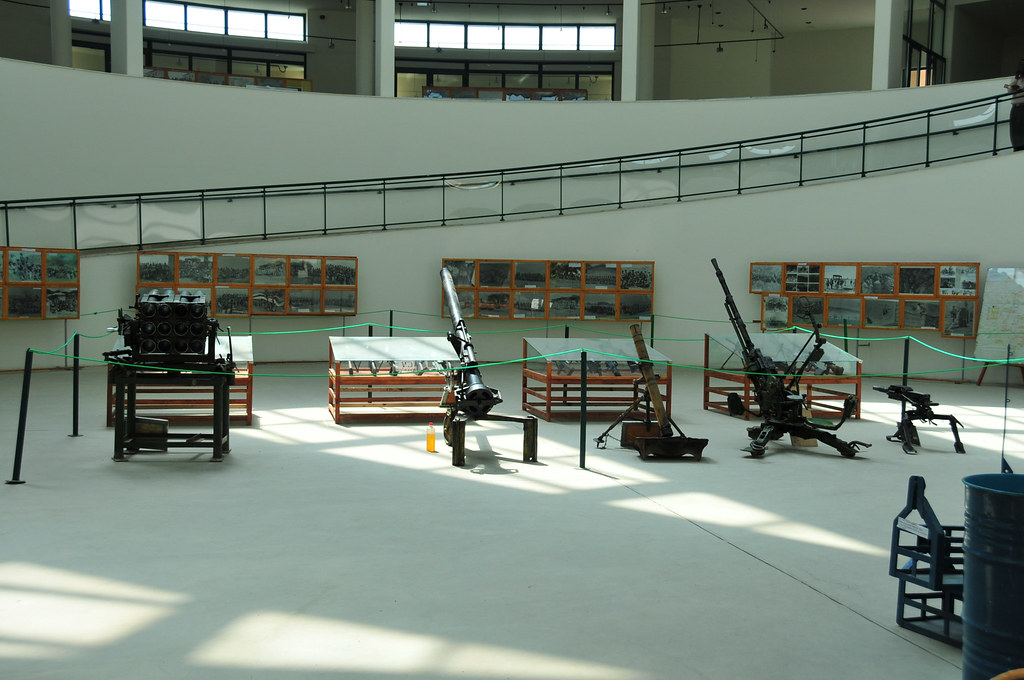 Ethiopia allows foundations that are controlled by political parties to own enterprises that compete with the private sector. The most important of these organizations is the Endowment Fund for the Rehabilitation of Tigray (EFFORT) controlled by the Tigray People’s Liberation Front (TPLF), the party of Prime Minister Meles Zenawi.
In a January 31, 2010, critical analysis of this system titled "The Rise of an Ethnic Oligarchy" (PDF file), Genet Mersha questions whether organizations like EFFORT are in the best interest of Ethiopia’s national development.
Image: "TPLF Museum, Mekele, Tigray," creative commons licensed Flickr content.
Ethiopia allows foundations that are controlled by political parties to own enterprises that compete with the private sector. The most important of these organizations is the Endowment Fund for the Rehabilitation of Tigray (EFFORT) controlled by the Tigray People’s Liberation Front (TPLF), the party of Prime Minister Meles Zenawi.
In a January 31, 2010, critical analysis of this system titled "The Rise of an Ethnic Oligarchy" (PDF file), Genet Mersha questions whether organizations like EFFORT are in the best interest of Ethiopia’s national development.
Image: "TPLF Museum, Mekele, Tigray," creative commons licensed Flickr content.
Tuesday, February 2, 2010
Another al-Shabaab announcement that probably doesn't represent any significant change in Somalia
The BBC Focus on Africa program asked me to comment yesterday on the announcement by the Somali extremist organization, al-Shabaab, that it must join officially with al Qaeda to confront "international crusaders and their aggression against Muslim people."
I responded that al-Shabaab has claimed to have a link with al Qaeda for more than a year. This announcement is an effort to formalize something that already existed in principle. It remains to be seen if this will result in more support, for example more foreign fighters, and direction from al Qaeda.
There might be a situation where al-Shabaab begins to look like a group primarily active in Algeria known as al Qaeda in the Islamic Maghreb (AQIM). The al-Shabaab announcement could even result eventually in a name change to something like al Qaeda in Somalia. The announcement probably does not portend any significant change of activity in Somalia, where al-Shabaab strongly opposes the Somali Transitional Federal Government (TFG) and the African Union troops in Mogadishu from Uganda and Burundi that support the TFG.
On the other hand, it may have an impact on countries in the region. Al-Shabaab might try to carry out attacks in neighboring Kenya and Ethiopia and against Uganda and Burundi, which provides troops for the African Union in Mogadishu.
Once al-Shabaab establishes a formal link with al Qaeda, there almost certainly will be a greater effort by the West in general and the United States in particular to counter al-Shabaab. African countries in the region may also step up their activity against al-Shabaab.
Subscribe to:
Posts (Atom)