The Mo Ibrahim Foundation has just released its 2018 Ibrahim Index of African Governance. It evaluates safety and rule of law, participation and human rights, sustainable economic opportunity, and human development.
Of Africa's 54 countries, more improved than deteriorated. The top five countries in order were Mauritius, Seychelles, Cape Verde, Namibia, and Botswana. Countries in the Horn of Africa performed poorly with Ethiopia scoring best at number 35 followed by Djibouti (38), Sudan (49), Eritrea (51), South Sudan (53), and Somalia (54).
Showing posts with label human development. Show all posts
Showing posts with label human development. Show all posts
Sunday, November 18, 2018
Tuesday, May 23, 2017
African Economic Outlook 2017
The African Development Bank, the Development Centre of the Organization for Economic Co-operation and Development, and the UN Development Programme published on 22 May 2017 "African Economic Outlook 2017: Entrepreneurship and Industrialization."
This annual massive study reports that in 2016, Africa's economic growth slowed to 2.2 percent from 3.4 percent in 2015 due to low commodity prices, weak global recovery and adverse weather conditions, which impacted agricultural production in some regions. Africa's economic growth is expected to rebound to 3.4 percent in 2017 and 4.3 percent in 2018.
Although economic headwinds experienced in the last two years appear to have altered the "Africa rising narrative," the African Development Bank believes the continent remains resilient, with non-resource dependent economies sustaining higher growth for a much longer period. With dynamic private sectors, entrepreneurial spirit and vast resources, Africa has the potential to grow even faster and more inclusively.
This annual massive study reports that in 2016, Africa's economic growth slowed to 2.2 percent from 3.4 percent in 2015 due to low commodity prices, weak global recovery and adverse weather conditions, which impacted agricultural production in some regions. Africa's economic growth is expected to rebound to 3.4 percent in 2017 and 4.3 percent in 2018.
Although economic headwinds experienced in the last two years appear to have altered the "Africa rising narrative," the African Development Bank believes the continent remains resilient, with non-resource dependent economies sustaining higher growth for a much longer period. With dynamic private sectors, entrepreneurial spirit and vast resources, Africa has the potential to grow even faster and more inclusively.

Monday, May 8, 2017
Most Attractive African Countries for Investment
Ernst and Young published in May 2017 its report on the 25 countries in Africa that are most attractive for foreign investment. The top ranked country in 2017 was Morocco followed by Kenya. Tanzania ranked number 5 and Uganda number 6. Ethiopia ranked number 20; no other country in the Horn of Africa made the top 25.
In 2016, the United States initiated the largest number (91) of FDI projects valued at $3.6 billion dollars and creating 11,430 jobs. France initiated the second largest number (81) of FDI projects valued at $2.1 billion and creating 8,087 jobs. China was third with 66 projects initiated but valued at $36.1 billion and creating 38,417 jobs. The dollar value of this figure needs to be treated with caution as its exceeds China's official cummulative FDI figure for all Africa through 2014.
In 2016, the United States initiated the largest number (91) of FDI projects valued at $3.6 billion dollars and creating 11,430 jobs. France initiated the second largest number (81) of FDI projects valued at $2.1 billion and creating 8,087 jobs. China was third with 66 projects initiated but valued at $36.1 billion and creating 38,417 jobs. The dollar value of this figure needs to be treated with caution as its exceeds China's official cummulative FDI figure for all Africa through 2014.
Thursday, May 4, 2017
Human Development Report and the Horn of Africa
The UN Development Program's Overview of Human Development Report 2016 is available. It is devoted to the theme of human development for everyone. The report raises two fundamental questions: who has been left out in progress in human development and how and why did that happen.
The report assesses 188 countries. The country with the highest human development index ranking is Norway. The United States ranks at number 10. Countries in the Horn of Africa score poorly. Sudan is number 165; Djibouti 172, Ethiopia 174, Eritrea 179, and South Sudan 181. Somalia is not ranked. The five lowest ranked countries in the world beginning with the lowest are the Central African Republic, Niger, Chad, Burkina Faso, and Burundi. African countries hold 19 out of the 20 lowest global rankings.
The report assesses 188 countries. The country with the highest human development index ranking is Norway. The United States ranks at number 10. Countries in the Horn of Africa score poorly. Sudan is number 165; Djibouti 172, Ethiopia 174, Eritrea 179, and South Sudan 181. Somalia is not ranked. The five lowest ranked countries in the world beginning with the lowest are the Central African Republic, Niger, Chad, Burkina Faso, and Burundi. African countries hold 19 out of the 20 lowest global rankings.
Monday, October 3, 2016
2016 Mo Ibrahim Index of African Governance
The Mo Ibrahim Foundation has released its report titled "A Decade of African Governance 2006-2015." Over the past decade it reports a very slight improvement in overall governance performance in Africa. The average score for African countries was 50 in 2015 as compared to 49 in 2006. Over the past ten years, 37 out of 54 countries have shown improvement in their overall governance score.
In 2015, the five highest ranked countries in overall governance were Mauritius, Botswana, Cape Verde, Seychelles, and Namibia. The five lowest ranked were Somalia, South Sudan, Central African Republic, Libya, and Eritrea. The five countries showing the most improvement over the past decade were Cote d'Ivoire, Togo, Zimbabwe, Liberia, and Rwanda. The five countries demonstrating the most deterioration were Libya, Madagascar, Eritrea, Central African Republic, and Mali.
In 2015, the five highest ranked countries in overall governance were Mauritius, Botswana, Cape Verde, Seychelles, and Namibia. The five lowest ranked were Somalia, South Sudan, Central African Republic, Libya, and Eritrea. The five countries showing the most improvement over the past decade were Cote d'Ivoire, Togo, Zimbabwe, Liberia, and Rwanda. The five countries demonstrating the most deterioration were Libya, Madagascar, Eritrea, Central African Republic, and Mali.
Monday, January 18, 2016
Top Priorities for Africa in 2016
The Africa Growth Initiative at Brookings has just published its "Foresight Africa: Top Priorities for the Continent in 2016" edited by Amadou Sy. It contains a wealth of charts and graphs and includes the following sections:
--Managing Economic Shocks: African Prospects in the Evolving External Environment
--Sustaining Domestic Growth: Structural Transformation Depends on Jobs, Industry, and SME's
--Supporting Human Development: Triumphs and Challenges on the Continent
--Capitalizing on Urbanization: The Importance of Planning, Infrastructure, and Finance for Africa's Growing Cities
--Maintaining Governance Gains: The National and Regional Agendas
--Expanding African Trade: Creating a Comparative Advantage and Strengthening Regional Partnerships
--Managing Economic Shocks: African Prospects in the Evolving External Environment
--Sustaining Domestic Growth: Structural Transformation Depends on Jobs, Industry, and SME's
--Supporting Human Development: Triumphs and Challenges on the Continent
--Capitalizing on Urbanization: The Importance of Planning, Infrastructure, and Finance for Africa's Growing Cities
--Maintaining Governance Gains: The National and Regional Agendas
--Expanding African Trade: Creating a Comparative Advantage and Strengthening Regional Partnerships
Friday, April 19, 2013
Education and Health Development in Somalia
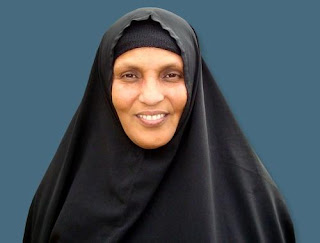 |
| Maryan Qasim. Source: official Twitter handle |
The minister discussed human development in post-transition Somalia with a particular focus on education and health. She offered her views on the challenges Somalia faces as it tries to build a more stable and prosperous future.
Subscribe to:
Posts (Atom)