Showing posts with label al Qaeda. Show all posts

Wednesday, December 20, 2023

Russia's Wagner Group Rebrands to Africa Corps

 The Messenger published on 18 December 2023 an article titled "Russia's Wagner Group Rebrands to Name Used by Nazis in Africa" by Nick Gallagher.

Russia's mercenary Wagner Group has been rebranded as the "Africa Corps," closely mirroring the Third Reich's "Afrika Korps" that operated in North Africa during World War II.  The name change follows Russian Deputy Defense Minister Yunus-bek Yevkurov's visit to Mali, Burkina Faso, and Niger in early December to maintain Russia's presence in the region.  The Africa Corps aims to get rid of Western influence in countries seeking its assistance. 

For additional background on this development, see the Institute for the Study of War's piece dated 7 December 2023 titled "Western Failures, Military Coups, and Kremlin Gains Undermine US Strategic and Counterterrorism Interests in the Sahel" by Liam Karr. 

Monday, November 21, 2011

Al-Shabaab contacts with al-Qaeda and networks in the West

Germany’s Konrad-Adenauer Stiftung (KAS) International Reports recently published a study titled “The Somali Shabaab Militias and Their Jihadist Networks in the West.”

The author, Dirk Baehr, is working on a Ph.D. on jihadism, processes of youth radicalization and strategies of de-radicalization. The study looks at al-Shabaab recruitment in the United States, Sweden, and Germany.

He argues that recruits from the Somali diaspora are today more useful for propaganda purposes and as suicide bombers. He expresses concern that al-Shabaab will develop into an international network.

Friday, July 22, 2011

"Al Qaeda in the Horn of Africa"

I'm quoted in Bernie Quigley's blog post yesterday for The Hill on Al Qaeda in the Horn of Africa:
The southern parts of Somalia are the drought crisis's "ground zero," as David Shinn, the U.S.'s former ambassador to Ethiopia, put it in an interview with the authors. This creates a perplexing dynamic, since the dominant force in the drought-stricken areas of Somalia is al Shabaab, the extremist, al Qaeda-linked militia that many U.S. policymakers see as the region's most significant strategic challenge.

Friday, July 15, 2011

"Somalia's Drought, America's Dilemma"

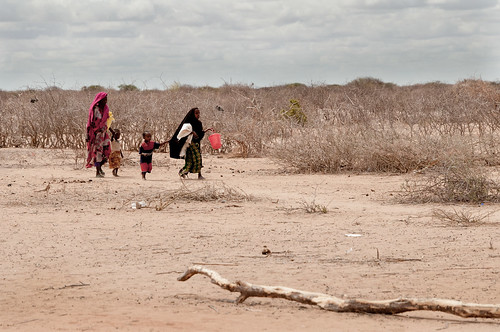
Flickr/Colin Crowley, Save the Children.
I'm quoted in Daveed Gartenstein-Ross and Tara Vassefi's Atlantic story on "How can the U.S. provide much-needed aid to a part of the world that is controlled by a terrorist group allied with al Qaeda?"

Gartenstein-Ross directs the Center for the Study of Terrorist Radicalization at the Foundation for Defense of Democracies. Vassefi is a faculty member at the Naval Postgraduate School.

Here's the first quote:
The southern parts of Somalia are the drought crisis's "ground zero," as David Shinn, the U.S.'s former ambassador to Ethiopia, put it in an interview with us. This creates a perplexing dynamic, since the dominant force in the drought-stricken areas of Somalia is al Shabaab, the extremist, al Qaeda-linked militia that many U.S. policymakers see as the region's most significant strategic challenge. This drought thus presents challenges for Shabaab itself, but also for the United States.
And here's the second:
Ambassador Shinn treated Shabaab's invitation to have NGOs apply for re-entry with some skepticism. "The devil is in the details," he said. "What will they require? They'll certainly insist that anyone who moves food does so with truckers who are part of Shabaab, or contribute to Shabaab's coffers. They'll want to make money on this."

Shabaab's propensity to extract economic gain from relief agencies also presents a challenge for U.S. policy. The U.S. has pledged $5 million to assist Somalis who have been struck by this drought. But, at the same time, U.S. policy is designed to prevent money from flowing to organizations like Shabaab, which has been named a Specially Designated Global Terrorist entity by the U.S. Treasury Department. Humanitarian organizations that provide money to such groups can face legal repercussions, even if it's extracted from them unwillingly as a "tax."

These two competing desires -- to help the Somali people, and to prevent money from reaching militant groups -- sets up a real dilemma for American policymakers. "The U.S. has been a leader in saying we won't put up with money going to Shabaab," Ambassador Shinn said, "but it creates a drastic humanitarian issue. Do you cut off food aid to a region because it will be indirectly funding a terrorist organization? Some humanitarians say you just have to hold your nose and do it, others say no."

Monday, June 13, 2011

"East Africa al-Qaeda chief killed in Somalia"

Al Jazeera English asked me to comment on 11 June, 2011, on the death in Mogadishu of Fazul Abdullah Muhammad, Al-Qaeda’s representative in East Africa for the past 10 years.

I explained that together with two other al-Qaeda operatives in East Africa, Fazul was wanted by the United States for planning the 1998 bombings of the U.S. embassies in Kenya and Tanzania. Ethiopian forces killed the first operative, Sudanese national Abu Talha al-Sudani, during fighting in Somalia in 2007.

American special forces killed the second, Kenyan national Saleh Ali Saleh Nabhan during a commando raid south of Mogadishu in 2009.

Now Somali Transitional Federal Government (TFG) forces have killed Comoro Islands national Fazul in Mogadishu, apparently after he took a wrong turn and drove into a TFG roadblock in the capital city. Fazul has narrowly escaped capture on several previous occasions.

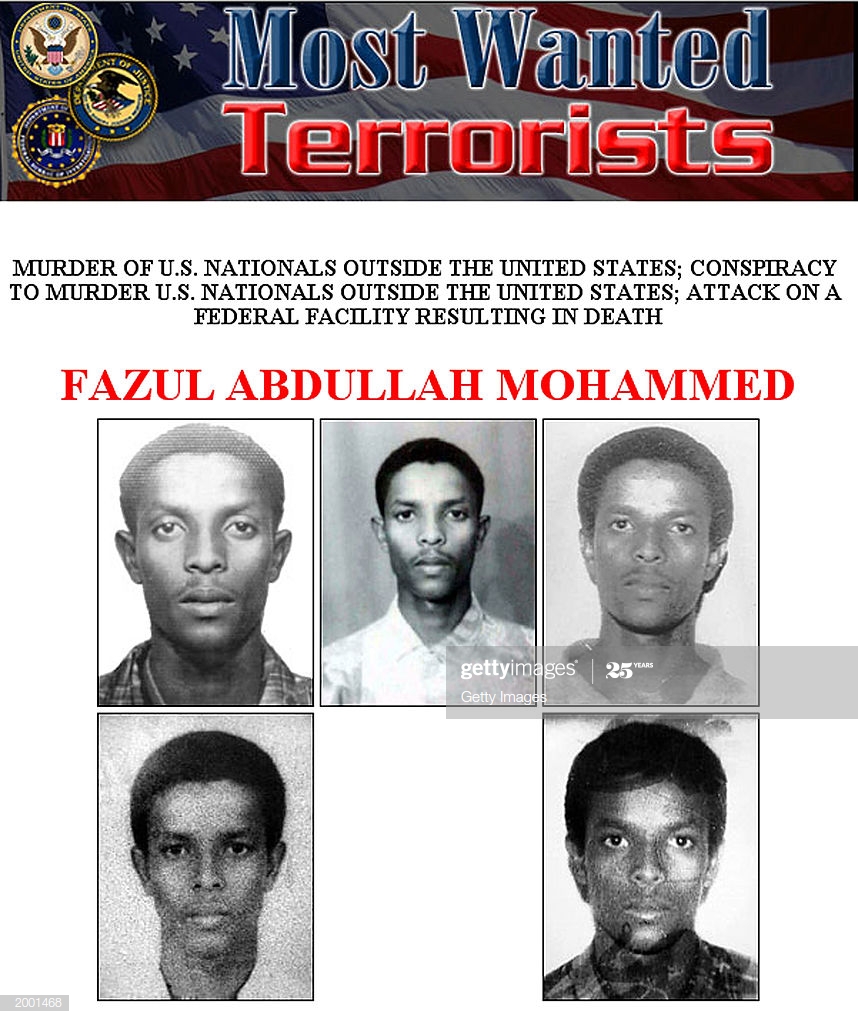
Image: Wikipedia, source: FBI.
This is a major defeat for al-Qaeda in East Africa, although al-Qaeda’s most recent significant successful attack in the region dates back to the destruction in 2002 of the Israeli-owned hotel outside Mombasa, Kenya. Al-Qaeda in East Africa has been on the run ever since, and now its leader is dead.

The fact that Fazul died in Mogadishu, presumably protected by al-Shabaab, underscores the links between al-Qaeda and al-Shabaab. It is less clear what impact his death will have on the operations of al-Shabaab. To the extent that al-Qaeda is providing tangible support to al-Shabaab, it could put additional pressure on the Somali organization.

Here is the link for the Al Jazeera English story, which was also linked on Yahoo's Atlantic Wire.

Here are the quotes:
David Shinn, a professor of international affairs at George Washington University, said Mohammed has been "the leader of Al-Qaeda in East Africa for the last 10 years or so".

"The US has been trying to track him down together with [his] two colleagues for more than 10 years. The two colleagues were killed earlier: one by Ethiopian troops inside Somalia in 2007, the other by US special forces in south Mogadishu in 2009," Shinn told Al Jazeera.

"He was the last of three and he was the big one."

...George Washington University's David Shinn said "the fact that [Mohammed] was killed in Mogadishu implies that there is perhaps an even closer connection between al-Shabab and al-Qaeda than we are aware of".

"We know there are close links but this would suggest that there may be material support going on at the present time," Shinn said.

While al-Qaeda has been marginalised in East Africa for lack of major success since the 2001 bombing of a hotel in Kenya, al-Shabab has made much progress on its own inside Somalia, he warned.

Death of al Qaeda leader in East Africa

The death on 7 June, 2011 of Fazul Abdullah Mohammed, al Qaeda’s leader in East Africa, has led not surprisingly to heavy media coverage of its impact on the situation in Somalia and future of al-Shabaab. In conversations with BBC World Service on 11 June and Radio France International on 12 June, I made the following points.

While the death of Fazul is a setback for al-Shabaab, it is not a fatal one.

Al-Shabaab has close links with al-Qaeda but operates with a significant degree of independence. It probably receives some limited financial and material support and perhaps some training through the al-Qaeda in East Africa branch.

Its links with al-Qaeda in the Arabian Peninsula (AQAP) are, however, more important than those with al-Qaeda central. It is not clear what kind of contact Fazul had with AQAP.

Al-Shabaab is also likely to attempt to step up its dramatic attacks against the Transitional Federal Government (TFG) and African Union forces in Mogadishu. Following the death of Fazul, al-Shabaab carried out, for example, a successful suicide bombing attack against the TFG interior minister.

While the death of Fazul and recent success of TFG and African Union forces in Mogadishu have been a boost to morale and offer the TFG something to build upon, it still must resolve its internal political differences and present a program that is broadly attractive to most Somalis.

This goal is still far from the reach of the TFG. The international community has given the TFG another year to pull itself together. If it does not do so within a year, I believe international support for the TFG will disappear.

Monday, June 6, 2011

"Al Qaeda base still strong in East Africa"


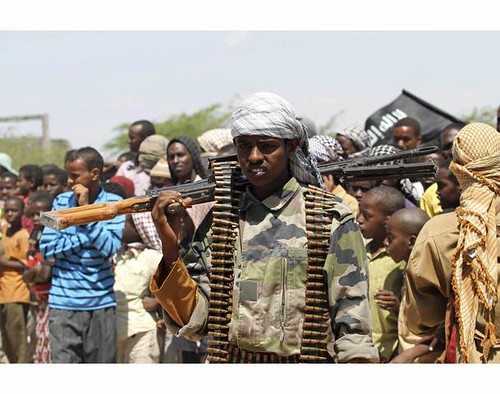
An Islamist al Shabaab soldier at a meeting between al Shabaab and rebel group Hizbul Islam, in southern Mogadishu, January 1, 2011, where the two groups officially merged. Flickr/Abayomi Azikiwe.

I'm quoted in Tristan McConnell's Global Post article, "Al Qaeda base still strong in East Africa: Somalia's Al Shabaab is the most public and active affiliate of Al Qaeda":
“Al Qaeda is a much weaker organization in East Africa today as compared to the mid-1990s,” said David Shinn, adjunct professor of international affairs at George Washington University and a former U.S. ambassador. “In effect, it has been supplanted by Al Shabaab, which has a Somalia-focused agenda.”

Shinn concluded: “I don't think bin Laden's death changes the situation for Al Shabaab.”

Thursday, May 5, 2011

The death of Osama bin Laden will probably not have much of an effect on al-Shabaab operations in Somalia

I'm quoted in Reuters east Africa correspondent Richard Lough's story "Bin Laden death will not dampen Somali insurgency." Below is the full quote I provided:


Al-Shabaab is not under the operational control of al-Qaeda but does have close links with it. I think the death of Osama bin Laden will have minimal impact on the al-Shabaab rank and file, nearly all of whom are young Somalis and few of whom are ideologically motivated.

Osama bin Laden was never a major draw for them. The death will have some impact on the leadership of al-Shabaab, about half of which consists of non-Somali foreigners and a small number of Somalis who had a direct connection with the Taliban and/or al-Qaeda. (It is believed there are between 200 and 300 non-Somali foreigners in al-Shabaab; there is a larger number of Somalis with foreign passports from the diaspora.)

Seth Anderson/Flickr
The non-Somali component in particular may begin to question the moorings of the organization and cause it to associate even more heavily with al-Qaeda in the Arabian Peninsula (AQAP). This was a trend well underway before the death of Osama bin Laden.

There is no evidence that al-Shabaab relied significantly on al-Qaeda for funding. It has its own internal sources—taxing, businesses, commerce through the port of Kismayu, etc. Al-Qaeda may have provided some training to al-Shabaab. There conceivably could be a disruption to the extent it was occurring at all.

Nevertheless, the tangible impact on al-Shabaab is likely to be minimal. The psychological impact on the foreigners and small number of Somali jihadists will be greater, but because al-Shabaab is not under the control of al-Qaeda, even this impact may be short-lived.

I doubt that the death of Osama bin Laden will have much of an effect al-Shabaab operations in Somalia. It is currently doing about everything that it is capable of doing. There are few attractive targets in Somalia other than the superior AMISOM forces.

There could be an effort to carry out an attack in a neighboring country— particularly Kenya, Uganda, Ethiopia, or Burundi — along the lines of the bombings in Kampala in July 2010. Al-Shabaab has the capacity to do this. It will have to weigh carefully, however, the response from the source that it might attack.

Following the bombings in Kampala, Uganda increased its troop presence in Mogadishu. Burundi might do the same. Ethiopia and Kenya could send troops deep into al-Shabaab-held territory, although that could be exactly what al-Shabaab would like to see happen. Any al-Shabaab attack beyond the region would be fairly modest in scope because of al-Shabaab’s limited capacity. But its extensive diaspora network does open that possibility.

AMISOM and the TFG have already begun a major offensive against al-Shabaab in Mogadishu and along the Kenya/Somalia border. I doubt there will be much change in activity as a result of the death of Osama bin Laden.

Wednesday, May 4, 2011

"Al-Qaida After 10 Years of War"

The Marine Corps University hosted, as part of the Emerald Express Strategic Symposium Series, a day-long conference in National Harbor, Md., on 26 April, 2011 titled “Al-Qaida after Ten Years of War.”

I gave a presentation on al-Qaida in East Africa and the Horn. There were about 350 persons in the audience, representing the uniformed services, civilians in government, the private sector and universities.

The conference turned out to be especially timely as it occurred only days before the death of Osama bin Laden.

You can listen to the panel session concerning East Africa, the Horn and Asia below, and the transcript appears here (PDF).

Monday, March 7, 2011

Al Shabaab's Foreign Threat to Somalia

This article of mine, which appears in Orbis (download it here), is a revised version of a paper delivered at FPRI's annual national security conference, last September, co-sponsored by the Reserve Officers Association in Washington, D.C.

Al Shabaab's Foreign Threat to Somalia by David H. Shinn, former U.S. ambassador to Ethiopia and Burkina Faso

Wednesday, February 16, 2011

Al-Qaeda, Al-Shabaab and Somalia

I addressed the Selfridge Air National Guard Base Community Council in Mount Clemens, Michigan, yesterday. It was part of a monthly speaking series where the community organization invites speakers from around the United States on a wide range of topics.

Al-Qaeda, Al-Shabaab and Somalia

Monday, November 15, 2010

Report on countering terrorism in East Africa and the Horn

The Congressional Research Service released a report titled "Countering Terrorism in East Africa: The U.S. Response" (PDF) on Nov. 3, 2010.

Authored by Lauren Ploch, it provides an overview of current U.S. counter-terrorism programs and influence operations in East Africa and the Horn and explores some of the strategies underpinning them. It also provides a brief description of the evolving terrorist threat in East Africa and the Horn.

The report explores U.S. measures to prevent, deter and preempt terrorism in the region, focusing on the response to threats posed by violent extremist groups such as al Qaeda and al-Shabaab. It provides counter-terrorism funding statistics for U.S. programs in Djibouti, Ethiopia, Kenya, Somalia, Tanzania, Uganda and for the region. The report discusses Combined Joint Task Force-Horn of Africa in Djibouti and U.S. support for the African Union peacekeeping force in Somalia.

Thursday, July 15, 2010

More quotes on al-Shabaab and Uganda

Obama Says U.S. Will "Redouble" Efforts Against Al-Shabaab in IPS:
"There have been problems in paying recruits regularly; some of that is due to not enough money, or the money is going into the wrong pockets," according to David Shinn, a former ambassador to Ethiopia and an expert on the Horn of Africa. "More importantly, the TFG has yet to offer a vision of a future for Somalis. That's the big challenge, and, until that happens, I can't be very optimistic. At some point, people are going to stop writing cheques."

...But while conceding there are differences between more nationalist and more al Qaeda-oriented elements in the Shabaab, Shinn argued that the leadership is united on basic issues. "Al-Shabaab wants total control; they're not going to want to share power," he said. "I see no willingness to compromise."

The administration official who also briefed reporters appeared to dismiss Bruton's suggestions as well. "I think that what we've seen in Kampala is a good example of why that's not a viable way forward," he said.

Kampala Bombings Cause Somali Blackout on Globalresearch.ca:
"The links between al Qaeda and al Shabaab are stronger" and training together, according to some brilliant analysis by David Shinn, former U.S. ambassador to Ethiopia and “expert on al Shabaab.”

Tuesday, July 13, 2010

Round up of quotes on al-Shabaab and Uganda

Here are some of my recent quotes about developments in Uganda:

"In Attack, al Qaeda-Linked Somali Group Expands Reach," in the Wall Street Journal:
"The links between al Qaeda and al Shabaab are stronger," said David Shinn, the former U.S. ambassador to Ethiopia and an expert on al Shabaab. He and a U.S. counterterrorism expert said the two groups work together to train operatives.
"Al Shabab Claims Responsibility for Uganda Blasts That Kill 74 World Cup Watchers," on FOX News:
"Al-Shabab has used suicide bombers in the past and shown no concern about civilian casualties in its attacks," said David Shinn, a former U.S. ambassador to Ethiopia and a professor at George Washington University. "Some elements of al-Shabab have also prohibited the showing of television, including the World Cup, in Somalia."
"Ugandan Bombings Mark an Inland Move for Radical Somali Militia," on the radio show The Takeaway (with John Hockenberry and Celeste Headlee). Audio clip:


"Somali Islamists claim Uganda carnage," in the The Washington Times:
David Shinn, a former U.S. diplomat in the region who continues to follow events there closely, said the attacks "could be an indication of things to come."

"If I were in Kenya, I'd be concerned right now," he said, noting that Kenya has a porous border with Somalia, is home to a large Somali diaspora, has been attacked by Islamic extremists in the past and had been a hub for al Qaeda-linked militants.
"Somali militant group claims responsibility for Uganda blasts," in the Associated Press:
"Al-Shabab has used suicide bombers in the past and shown no concern about civilian casualties in its attacks," said David Shinn, a former U.S. ambassador to Ethiopia and a professor at George Washington University. "Some elements of al-Shabab have also prohibited the showing of television, including the World Cup, in Somalia."
"East Africa vulnerable to Somali attacks across 'porous borders'," on BBC World Service. Audio clip.

Thursday, July 8, 2010

Analysis of Somalia's al-Shabaab organization

Abdi Aynte, recently with the Voice of America Somali service and soon to join Al Jazeera in Doha, authored a solid analysis of the Somali jihadist organization, al-Shabaab that calls for an Islamic caliphate and now controls about half of Somalia. He published an earlier version of the paper in the March 2010 issue of the Horn of Africa Journal. You can access it here.

Aynte concluded that al-Shabaab evolved from a little known extremist group to a global jihadist offshoot with links to al Qaeda. It cleverly exploited the irredentist Islamist movement of Somalia to provoke Ethiopia to attack so that it could activate its ultimate jihadist agenda, marginalize its moderate allies in the Union of Islamic Courts and expand the territory under its control.

While al-Shabaab successfully brought all Somali clans into its leadership, it isolated itself from most Somalis by becoming closely tied to al-Qaeda and adopting an extremist agenda.

Thursday, March 11, 2010

Council on Foreign Relations report on Somalia

The Council on Foreign Relations released a report on March 10 titled "Somalia: A New Approach" by Bronwyn E. Bruton. I was one of the people on the advisory committee who offered comments on the report in its earlier drafts. The report has much to commend it and deserves a careful read by anyone interested in Somalia. The strength of the report from my optic is the call for avoiding an overly-zealous U.S. counter-terrorist policy in the region, urging reform of TFG structures so that they become more inclusive, a focus on decentralized development initiatives, urging Ethiopia not to send troops back into Somalia, engaging Middle Eastern partners on the Somali issue and the recommendations dealing with Somali piracy. The report contains several conclusions and recommendations with which I am not in agreement.
  1. The report begins with the premise that the Somali Transitional Federal Government (TFG) is doomed to fail. While the history of Somali governments since 1991 gives credence to that assumption, and the TFG is admittedly very weak, I am not convinced that it is destined to fail. The fact that the TFG under President Ahmed’s leadership has lasted more than a year has surprised many experts on Somalia. More importantly, I would argue that the TFG is stronger today than it was six months ago. This does not ensure that it will succeed, but it is premature to conclude that it will fail.
  2. The report also assumes that it is possible to negotiate with elements of the extremist al-Shabaab organization, which by its own admission is now linked to al-Qaeda. The report urges that the TFG should try to draw in leaders of al-Shabaab. At another point, the report says "the United States and its partners can encourage the pragmatic, nationalist and opportunistic elements of the Shabaab to break with their radical partners by adopting a position of neutrality toward all local political groupings..." The report also notes that al-Shabaab is susceptible to realignment under the right conditions. It may be possible to peal away some of the al-Shabaab rank and file, but there is no indication that there are any pragmatic leaders in al-Shabaab today. They seem to have become more radicalized with each passing month. In addition, there has been a significant increase in foreign influence in the organization. Negotiating with al-Shabaab's leadership strikes me as wishful thinking. In any event, the United States should stay out of internal Somali negotiations; leave this up to the Somalis.
  3. The report calls for a reorganization of the TFG under a technocratic prime minister and a council of leaders that includes Sheikh Sharif. I see no point in this. The current prime minister is a technocrat. Creating new institutions and shuffling people around will only create confusion at a time when the TFG seems to be gaining some traction. This is no time to restructure the government.
  4. Finally, the report suggests the U.S. should consider a U.S. Navy ship visit to Puntland and Somaliland ports. This not only contradicts the report's earlier recommendation that calls for less American involvement in Somalia, but it would raise all kinds of concerns among Somalis about American intentions in the country. This is a very bad idea.

Friday, February 19, 2010

Assistant secretary of state for African affairs speaks at GW

Image: Ambs. Shinn and Carson. Photo by Jessica McConnell/GW. Ambassador Johnnie Carson, assistant secretary of state for African affairs, addressed some 200 students and members of the public at the Elliott School of International Affairs on February 18, 2010. The Elliott School is just a short sprint from the State Department. Ambassador Carson had a 37-year career in the Foreign Service that included ambassadorships to Kenya, Zimbabwe and Uganda and as principal deputy assistant secretary of state for African Affairs. Following an introduction by the dean of the Elliott School, Michael Brown, Ambassador Carson focused his remarks on U.S. policy towards Africa in the Obama Administration. He identified five priorities in U.S. policy towards Africa.
  1. To help build strong and stable democracies on the continent. Sustainable economic development and the prevention of armed conflict must be coupled with the development of accountable government institutions.
  2. To support economic growth and development. This must include the full inclusion of women in all areas of the economy. The centerpiece of this policy is the Millennium Challenge Account and the Africa Growth and Opportunity Act. In addition, the Obama Administration has pledged $3.5 billion for a food security program that will provide critical tools to African farmers to build local capacity.
  3. To strengthen public health systems so that they can deal with the ravages of HIV/AIDS, malaria, cholera, tuberculosis and hepatitis. The Obama Administration has pledged to continue the President’s Emergency Plan for AIDS Relief (PEPFAR).
  4. To help prevent, mitigate and resolve armed conflicts. There are new special envoys for Sudan and the Great Lakes Region to focus attention on these two especially troubled areas. The United States will work closely with the African Union in this effort.
  5. To work with America’s African partners to address transnational challenges such as narcotics trafficking, trafficking in persons, climate change and violent extremism. Extremist groups include local movements aligned with al-Qaeda.
A lively question and answer period followed. The summary that follows constitutes my recollection of the discussion. It has not been vetted with Ambassador Carson. Image: Ambs. Shinn and Carson and Michael E. Brown, dean of the Elliott School. Photo by Jessica McConnell/GW. Several of the questions dealt with the coup in Niger that removed President Mamadou Tandja from office fewer than 24 hours before Ambassador Carson gave his remarks. While Ambassador Carson condemned the extra-legal overthrow of the government in Niger, he also strongly criticized the manner in which Tandja extended his time in office. Tandja not only ignored the term limit provision in Niger’s constitution but then refused to abide by decisions of both the legislature and judiciary that upheld those term limits. The best solution now, Ambassador Carson said, is for a speedy return to civilian rule and an early free and fair election. One participant asked why the United States had taken a prominent role in urging the United Nations Security Council to impose sanctions against Eritrea and why it had not done more to ensure implementation of the Algiers Agreement that defined the border between Ethiopia and Eritrea. Ambassador Carson responded that Washington’s door remains open to Eritrea. The United States would like to have better relations with Eritrea, and it also stands by implementation of the Algiers Agreement. He said he personally had reached out to Asmara on several occasions but was rebuffed each time. He emphasized that Eritrea’s actions in the region, especially Eritrea’s support for spoiler groups in Somalia, were hostile to several of its neighbors and in conflict with U.S. policy. In response to a question about the crisis of governance in Nigeria, Ambassador Carson was generally optimistic. President Umaru Yar’Adua has been ill for months and is being treated at a hospital in Saudi Arabia. His prolonged absence from Nigeria raised questions about his ability to govern the country. When the president becomes incapacitated, the Nigerian constitution calls for the vice president to become acting president. Although Nigeria’s institutions delayed in taking this action, they ultimately did so. As a result, former Vice President Goodluck Jonathan is now acting president of Nigeria. Ambassador Carson explained that the constitutional process worked in Nigeria as it should. A number of persons who asked questions expressed concern about setbacks in the democratic process in Africa. Ambassador Carson acknowledged that there had been some backsliding as underscored most recently in Niger and has also occurred recently in Guinea-Bissau, Guinea-Conakry, Madagascar and Mauritania. He was quick to point out, however, that there are also many governance success stories. He cited the cases of South Africa, Botswana, Namibia, Malawi, Mali, Benin, Ghana, Tanzania and Mauritius, among others. One questioner asked what has happened to the Africa Command (AFRICOM). The United States announced it with such fanfare and suggested it would be a very different kind of military command with significant policy engagement. In the meantime, it seems to have disappeared from view. Ambassador Carson responded that until the creation of AFRICOM, Africa was the only large region of the world that did not have a separate military command. The European Command in Stuttgart had responsibility for Europe and most of Africa. The Central Command in Tampa, Florida, watched over much of the Middle East and Northeast Africa and the Pacific Command in Hawaii had responsibility for the Pacific region and several Indian Ocean Islands that are part of Africa. AFRICOM placed all of Africa except Egypt, which remains with the Central Command, under its jurisdiction. U.S. foreign policy is, however, the purview of the State Department. The military commands support U.S. policy and bring some additional resources to those parts of the world where they have responsibility. In the case of Sub-Saharan Africa, the African Bureau of the State Department has primary policy responsibility.

Tuesday, February 2, 2010

Another al-Shabaab announcement that probably doesn't represent any significant change in Somalia

The BBC Focus on Africa program asked me to comment yesterday on the announcement by the Somali extremist organization, al-Shabaab, that it must join officially with al Qaeda to confront "international crusaders and their aggression against Muslim people." I responded that al-Shabaab has claimed to have a link with al Qaeda for more than a year. This announcement is an effort to formalize something that already existed in principle. It remains to be seen if this will result in more support, for example more foreign fighters, and direction from al Qaeda. There might be a situation where al-Shabaab begins to look like a group primarily active in Algeria known as al Qaeda in the Islamic Maghreb (AQIM). The al-Shabaab announcement could even result eventually in a name change to something like al Qaeda in Somalia. The announcement probably does not portend any significant change of activity in Somalia, where al-Shabaab strongly opposes the Somali Transitional Federal Government (TFG) and the African Union troops in Mogadishu from Uganda and Burundi that support the TFG. On the other hand, it may have an impact on countries in the region. Al-Shabaab might try to carry out attacks in neighboring Kenya and Ethiopia and against Uganda and Burundi, which provides troops for the African Union in Mogadishu. Once al-Shabaab establishes a formal link with al Qaeda, there almost certainly will be a greater effort by the West in general and the United States in particular to counter al-Shabaab. African countries in the region may also step up their activity against al-Shabaab.

Monday, January 4, 2010

Pre-recorded interview with BBC World Service on al Qaeda situation in Somalia and Yemen

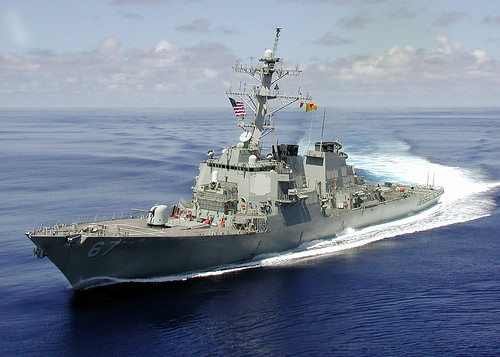
In an interview with the BBC World Service yesterday, I commented on the al Qaeda links between Somalia and Yemen. While noting that the al Qaeda threat in Yemen is far more serious than the one in Somalia, there is considerable contact between Somalis and Yemenis. More than 200,000 Somalis have taken refuge in Yemen. Although the vast majority is economic refugees, a tiny percentage has almost certainly been attracted to terrorist training camps in Yemen. In addition, a small number of Yemeni jihadis has joined al-Shabaab in Somalia, an organization that flaunts its connection with al Qaeda. Yemen is clearly the focus of U.S. interest as evidenced by recent announcements of increases in funding for Yemeni security forces and development assistance to the country. While the United States is primarily interested in Yemen because of its connection with the Nigerian suicide bomber who tried to blow up a Northwest flight to Detroit, there will probably be some spillover attention given to the situation in Somalia. Al Qaeda links with Yemen are long-standing, date back to the early 1990s and include the attack on the USS Cole off the coast of Yemen in 2000. Image: USS Cole by Flickr user mashleymorgan, licensed by Creative Commons.

Thursday, October 1, 2009

Quotes in IPS story on Somalia

I'm quoted in Zach Rosenberg's and Jim Lobe's IPS story "President Calls for More Aid in U.S. Visit." Here are the quotes:
While some observers here and at the U.N. were increasingly concerned as recently as three months ago that the TFG was on the verge of collapse, they are expressing more confidence that Sharif's government can hold on, even if it lacks the power to decisively defeat the insurgent groups. "It's a waiting game now," said David Shinn, a Horn of Africa expert at George Washington University who served as ambassador to Ethiopia from 1996 to 1999. "Today, I think the TFG has a pretty good chance of outwaiting Al-Shabaab." ...Sporadic cruise-missile attacks by U.S. forces against suspected al Qaeda and Al-Shabaab leaders during Ethiopia's two-year occupation of Somalia are believed to have contributed to sympathy for the rebels and growing anti-U.S. sentiment in the country in part due to the fact that civilians were also killed injured. Reaction to the last month's attack, however, appeared to be more muted, according to Shinn. "There doesn't seem to have been much blowback in Somalia, perhaps because (Nabhan) was a Kenyan from Yemen," noted Shinn, who added that the attack's precision eliminated collateral damage.